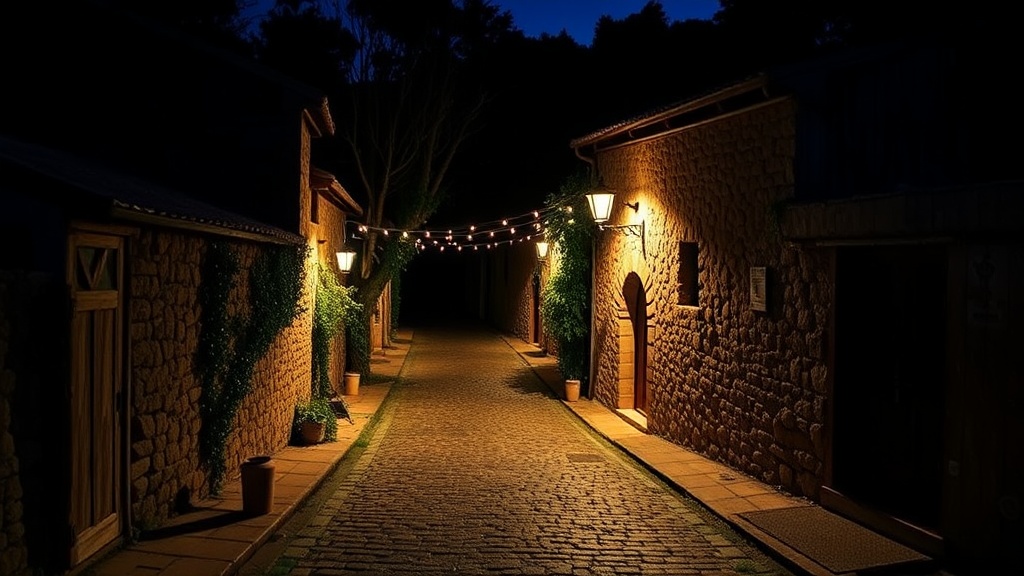
7 Hidden Corners of Carignan Even Longtime Residents Haven't Discovered

Here's something that might surprise you—despite being one of the oldest municipalities in the Montérégie region, Carignan still holds secrets that even families who've lived here for three generations haven't stumbled upon. We're talking about overlooked pocket parks, forgotten historical markers, and quiet community spots that rarely make it into the municipal newsletter. Whether you've called Carignan home for six months or sixty years, there's always something new hiding in plain sight.
This isn't a tourist's checklist—it's a local's guide to the corners of our community that deserve more attention. Let's wander through seven spots that make Carignan feel like the layered, interesting place it truly is.
What's the Story Behind the Forgotten Cemetery on Rue Principale?
Tucked behind a row of mature oak trees near the intersection of Rue Principale and Boulevard Marie-Victorin lies one of Carignan's most quietly significant historical sites—the old Saint-Antoine-de-Padoue cemetery. Established in the mid-19th century when Carignan was still known as the parish of Saint-Antoine-de-Padoue-de-la-Longue-Pointe, this small burial ground holds the remains of some of our earliest settlers.
Most residents drive past without noticing the modest stone marker at the entrance. The cemetery isn't large—perhaps fifty graves—but the headstones tell stories of Carignan's agricultural roots, with many bearing the names of families whose descendants still farm nearby lands. The Société d'histoire de la Seigneurie de Chambly maintains the site, though it's not widely advertised in local materials.
If you're interested in genealogy or simply want to connect with Carignan's deeper history, this spot offers something profound. The cemetery is open to respectful visitors during daylight hours. Bring a notebook—you'll find birth and death dates that span Quebec's transition from colony to province, and the inscriptions (many in 19th-century French) offer glimpses into how our ancestors viewed mortality, faith, and community.
The municipality has discussed installing interpretive signage here for years, but funding hasn't materialized. For now, it remains one of those quietly powerful places that reward the curious.
Where Can Carignan Residents Find the Quietest Walking Paths?
Everyone knows about the major trails—the ones marked on the city website, the ones with parking lots and garbage bins. But Carignan harbors a network of informal walking paths that longtime dog walkers and morning joggers have carved through undeveloped parcels over decades.
The most peaceful stretch runs parallel to the Acadie River between Rue Girouard and Avenue Bourgogne. There's no official trailhead—you'll find the entrance between two residential properties on Rue des Chênes. Follow the well-worn dirt path about two hundred meters and you'll emerge into a small floodplain meadow that fills with wildflowers in late June. Herons fish here in the early mornings, and if you're quiet, you might spot deer at dusk.
Another under-the-radar route cuts through the wooded area behind École Secondaire de la Mosaïque. Students use it as a shortcut, but few adults realize it connects to the larger green corridor running toward the Chambly Basin. The path isn't maintained by the city (technically it crosses private land with an informal easement), so wear sturdy shoes and skip it after heavy rain.
These unofficial routes represent something important about Carignan—our community has always found ways to move through the landscape, whether or not there are paved paths. Just remember: because these aren't municipal trails, pack out whatever you pack in. The regulars keep these spots clean, and we'd like to keep it that way.
Which Carignan Neighborhoods Still Hold Original Farmhouse Architecture?
Drive through the newer subdivisions near Boulevard de l'Hôtel-de-Ville and you'd be forgiven for thinking Carignan's architectural history began in the 1990s. But several pockets of original farmhouse architecture survive—some lovingly restored, others quietly aging until someone notices their value.
The most concentrated collection sits in the blocks between Rue Sainte-Thérèse and Avenue de l'Église, where five mid-19th-century homes still stand. Look for the distinctive Quebec vernacular style: steeply pitched roofs (designed to shed heavy snow), narrow rectangular windows, and hand-hewn timber frames. The house at 847 Rue Sainte-Thérèse—painted barn red with white trim—dates to 1852 and remains a private residence. The current owners restored the original pine floors and discovered newspapers from 1897 stuffed in the walls as insulation.
Another survivor sits at the corner of Boulevard Marie-Victorin and Rue Demers. This former farmhouse now houses a small accounting business, but the structure itself—built around 1880—retains its original fieldstone foundation. The owners kept the exposed stone visible in the basement, and they're usually happy to show it to genuinely interested visitors.
These buildings matter because they ground Carignan in something older than the housing boom. They remind us that before this was a commuter suburb, it was farmland worked by families who built to last. The Quebec Ministry of Culture and Communications maintains a register of heritage properties that includes several Carignan addresses worth seeking out.
What Community Programs in Carignan Fly Under the Radar?
The city's recreation department runs the programs everyone knows about—swimming lessons at the pool, summer day camps, the usual suspects. But several smaller initiatives operate with minimal publicity, serving niche needs in our community.
The Tool Library at the Centre communautaire de Carignan deserves far more attention than it receives. Located in a back room most people assume is storage, this lending library operates like a book library but for power tools, lawn equipment, and specialized gear. Need a pressure washer for your siding? A tile cutter for a bathroom renovation? A rototiller for your garden plot? Borrow it for a week, return it clean, and pay nothing. The program runs on volunteer hours and small donations, and it's saved hundreds of residents from buying equipment they'd use once.
Then there's the Snow Buddy program—unadvertised on the city website but coordinated through the Centre d'action bénévole de la Vallée-du-Richelieu. Volunteers (mostly retirees) are matched with elderly or mobility-limited residents who need their walkways cleared after storms. It's informal, neighbor-to-neighbor assistance that keeps people safe without the bureaucracy of formal city services.
The third hidden gem? The seed exchange hosted every March at the Bibliothèque de Carignan. Local gardeners bring saved seeds from their best-performing plants, labeled with notes about growing conditions. You don't need to contribute to take seeds—though experienced growers usually bring something to share. It's part practical resource, part social gathering, and entirely free.
Which Local Landmarks Tell Carignan's Industrial History?
Carignan's story isn't just agricultural. For a brief but intense period in the late 19th and early 20th centuries, our corner of the Montérégie hosted small-scale industrial operations that supported the broader regional economy.
The most visible remnant stands near the river: the old stone piers that once supported a bridge connecting Carignan to Chambly. Built in 1875 and destroyed by ice floes in 1928, the bridge carried horse-drawn wagons loaded with agricultural goods to market. The piers remain—massive stone blocks that now serve as informal fishing spots and sunning rocks for turtles. You'll find them where the Acadie River narrows, visible from the small parkette at the end of Rue du Pont.
Less visible but equally interesting: the foundations of the Carignan brickworks, which operated from 1890 to 1935 near what is now Parc des Vétérans. The company made the distinctive yellow bricks used in several local buildings, including the original section of the église Saint-Antoine-de-Padoue. If you know where to look (and don't mind tromping through brush), you can still find kiln fragments and discarded bricks scattered through the woods behind the park's east end.
These industrial remnants don't appear on any heritage tour—there's no plaque, no interpretive panel. But they're part of what made Carignan economically viable long before it became a bedroom community for Montreal and Longueuil.
Where Do Carignan's Musicians and Artists Actually Gather?
Every community has its informal cultural hubs—the places where creative people actually hang out, as opposed to the official arts centers with their programming schedules and grant applications. In Carignan, those hubs are quieter but no less vital.
The open mic nights at Café Bistro L'Autre Vent (just over the border in Chambly but frequented by Carignan residents) have become an unofficial gathering point for local musicians. Every third Thursday, the back room fills with folk singers, bluegrass pickers, and the occasional poetry reader. It's not a Carignan venue technically, but the crowd is mostly our neighbors, and the vibe is decidedly local rather than tourist-oriented.
Closer to home, the lobby of the Bibliothèque de Carignan hosts an informal "knitting and knowledge" group every Tuesday morning—though "knitting" is loosely interpreted to include crochet, embroidery, and any portable craft. The conversation ranges from technique to local politics to book recommendations, and newcomers are genuinely welcomed. No registration required, no fees, just chairs arranged in a circle near the magazine racks.
For visual artists, the real scene happens during the annual Portes Ouvertes des ateliers d'artistes de la Vallée-du-Richelieu, when several Carignan residents open their home studios to the public. The event happens each October, and it's your chance to see who's actually making art in our community—not imported work, but pieces created in spare bedrooms and converted garages right here on our streets.
How Can Residents Access Hidden Green Spaces in Carignan?
Beyond the official parks listed on the city website—Parc des Vétérans, Parc des Bateliers, the usual suspects—Carignan contains several undeveloped green spaces that function as informal parks for those who know where to find them.
The largest sits on municipally owned land between Avenue de Normandie and Boulevard Marie-Victorin. Zoned for eventual development but sitting empty for over a decade, this twelve-acre parcel has reverted to meadow and young forest. Locals walk dogs here, kids build forts in the sumac groves, and in August, the wild blackberry bushes produce enough fruit for serious picking. There's no signage indicating it's public land, which keeps the crowds away.
Another accessible-but-unmarked space lies behind the fire station on Rue Principale. The department maintains a training field that doubles as an open grassy area when not in use. Residents have unofficially adopted it for kite flying, informal soccer games, and sunset watching. The firefighters don't mind—in fact, they've been known to join in on slow evenings.
These spaces exist in a gray area—not quite parks, not quite private property, but functioning as shared community resources through mutual understanding. They represent something valuable about Carignan: we still have room to breathe, spaces that haven't been programmed and scheduled into rigid recreational functions. Use them respectfully, and they'll remain available.
The best way to find these spots is to walk—actually walk, slowly, through neighborhoods you've only driven through. Look for gaps between houses, unofficial paths cutting through hedgerows, open fields without farm equipment. Ask older residents. They remember when Carignan was mostly farmland, and they know which corners have stayed wild.
Our community rewards curiosity. The longer you live here, the more layers you discover—not tourist attractions, but real places where real life happens. That's the difference between living somewhere and merely residing there. Carignan offers the former, if you're willing to look.