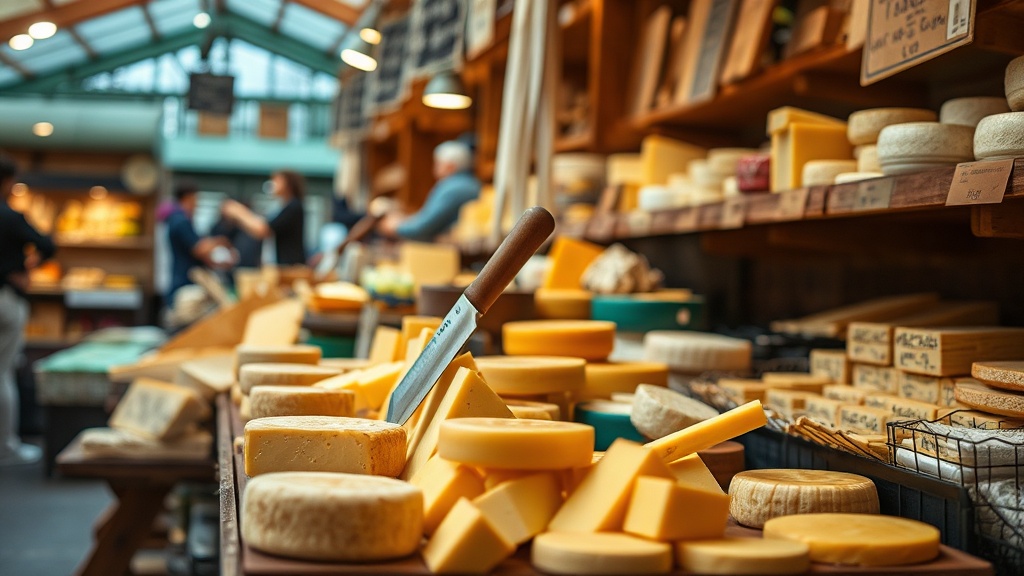
Selecting the Best Local Cheese at Quebec Markets

You will learn how to identify high-quality Quebecois cheeses, understand the differences between milk types, and know exactly what to ask producers at local markets. This guide focuses on the practical steps of selecting artisanal cheese, from checking rind texture to understanding aging processes, to ensure you get the best value for your money. Picking the right cheese isn't just about flavor—it's about knowing the craftsmanship behind the product.
What Types of Quebec Cheese Should I Look For?
You should look for a variety of milk types, specifically cow, goat, and sheep, as Quebec produces world-class versions of each. While many people default to cow's milk cheeses like a classic Brie or Camembert, our local producers are doing incredible work with goat's milk (chèvre) and even water buffalo milk.
When you visit a market, look for these specific categories:
- Fresh Cheeses: These are unaged and meant to be eaten immediately. Think of a fresh Chèvre or a creamy Quebecois feta.
- Soft-Ripened Cheeses: These have a fuzzy white rind (mold) and a gooey center. A local version of Brie is a staple here.
- Semi-Hard Cheeses: These are versatile and work well on a charcuterie board. Look for something like a traditional cheddar or a Gouda-style cheese.
- Hard/Aged Cheeses: These are the heavy hitters. They are often firm, crumbly, and have developed deep, complex flavors over months or years of aging.
If you want to see the technical breakdown of how these are classified, the Wikipedia entry on cheese provides a great overview of the global standards that many Quebecois artisans still follow or adapt. It's worth noting that many of our local producers use traditional methods that might differ slightly from international industrial standards.
Don't be afraid to try something slightly unusual. A sheep's milk cheese often has a richer, more distinct profile that can change your entire perspective on what "cheese" means.
How Do I Know if the Cheese is High Quality?
High-quality cheese is identified by its aroma, texture, and the absence of unintended defects like off-smells or excessive moisture. A good rule of thumb is to use your senses—but don't be shy about asking the producer for a sample.
Here is a quick checklist to use while you are standing at the market stall:
- The Smell Test: It should smell like the environment it was raised in (earthy, milky, or nutty). If it smells like ammonia or "sour" in a way that isn't pleasant, put it back.
- The Texture Check: Press the cheese gently. A soft cheese should feel supple, not liquid. A hard cheese shouldn't be excessively brittle unless it's meant to be aged.
- The Rind Integrity: Look at the outside. Is the rind consistent? For Brie-style cheeses, the rind should be white and intact, not slimy or discolored.
- The Color: Natural colors vary. A high-quality aged cheddar might have a deep, uneven yellow, while a goat cheese should be bright white.
I always tell my friends: if the producer is hesitant to let you smell it, that's a red flag. A confident producer knows their product inside and out. They'll be happy to let you experience the scent.
It's similar to picking the perfect seasonal produce at local farmers markets—you have to look for the signs of freshness and quality that aren't always obvious on a label. If the produce looks tired, the cheese probably is too.
How Much Does Artisan Quebec Cheese Cost?
The price of artisan cheese typically ranges from $3.00 to $6.00 per 100 grams, depending on the milk source and the aging time. You will pay more for sheep's milk or long-aged varieties because the production process is more intensive and the yield is lower.
| Cheese Type | Average Price (per 100g) | Flavor Profile |
|---|---|---|
| Fresh Goat Cheese | $3.50 - $4.50 | Tangy, bright, acidic |
| Soft-Ripened (Brie style) | $4.00 - $5.50 | Creamy, buttery, mushroomy |
| Aged Cheddar | $5.00 - $7.00 | Sharp, nutty, crunchy crystals |
| Blue Cheese | $5.50 - $7.50 | Strong, salty, pungent |
While it might seem expensive compared to the supermarket brands, you're paying for the craftsmanship. You aren't just buying calories; you're buying a piece of Quebecois culture. A block of aged cheddar from a local farm has a depth that a mass-produced version simply cannot replicate.
If you're on a budget, stick to the semi-hard varieties. They are often more affordable and can be used in many different cooking applications. But if you're hosting a dinner, spend the extra few dollars on a high-end aged cheese—it makes a massive difference in the final presentation.
What Questions Should I Ask the Producer?
You should ask about the milk source, the aging duration, and the specific region where the cheese was produced. These questions reveal the transparency and the depth of the producer's knowledge.
Here are three questions that will help you get the most out of your purchase:
- "What kind of milk was used for this?" (This helps you understand the base flavor profile—cow is mellow, goat is tangy, sheep is rich.)
- "How long has this been aging?" (Age often dictates the intensity of the flavor and the texture.)
- "What is the best way to serve this?" (Sometimes a cheese needs to sit at room temperature for 30 minutes to truly shine—never serve it straight from the fridge!)
The official Quebec agricultural resources often highlight the importance of regionality. A cheese made with milk from a specific valley in the Eastern Townships will taste different than one from the Charlevoix region. Knowing the origin helps you build a mental map of our incredible local flavors.
Don't be afraid to look a little "picky." The producers at these markets are usually incredibly passionate about their work. They actually enjoy talking about the nuances of their cheese. If you ask about the specific pasture where the cows grazed, you'll likely get a twenty-minute lecture on soil quality and clover types—and honestly, that's half the fun of going to the market.
It's a lot like finding the best local microbreweries. You aren't just looking for a drink; you're looking for a story. The same applies to your cheese board. The more you know about the story behind the cheese, the better it will taste when you finally bite into it.
One thing to keep in mind: always bring a reusable container or a small box. Many of these artisanal producers don't use plastic wrap, and you'll want to keep your purchase safe and clean on the drive home.
If you're planning to pair your cheese with something else, consider a local cider. The acidity of a good Quebec cider cuts through the fat of a creamy cheese perfectly. It's a classic pairing for a reason.
Steps
- 1
Check the Terroir
- 2
Examine Texture and Rind
- 3
Ask the Producer About Aging
- 4
Test for Flavor Balance